
Back to School With Anaphylaxis
How to Reduce Allergy Anxiety and Be Prepared for an Emergency

Back-to-school season brings plenty of excitement: a new grade, new teachers, fresh school supplies, fall sports, and a return to familiar routines. But for families managing severe allergic reactions and anaphylaxis, the start of school can also bring a different emotion: anxiety.
Parents may find themselves asking questions other families rarely have to consider. Does every teacher know about my child’s allergy? Will someone know what to do if my child experiences anaphylaxis? What happens during lunch, field trips, sports, or after-school activities? Is emergency treatment readily accessible? Who will administer the dose? The teacher? The nurse?
Preparing for back-to-school allergies involves more than packing supplies. It means creating an allergy action plan, communicating with the people responsible for your child’s care, and making sure appropriate epinephrine is accessible in an emergency.
For families living with severe allergies, preparation can help replace some of that uncertainty with confidence.
What You’ll Learn in This Article:
In this article, we’ll discuss how families can prepare for anaphylaxis at school, why an up-to-date allergy action plan and access to epinephrine matter, and how emerging needle-free approaches to emergency treatment could help address some of the challenges families face today.
- Why Back-to-School Allergies Can Cause Anxiety: Understand why returning to school can be particularly stressful for children with severe allergies and their families.
- Creating an Allergy Action Plan for School: Learn what parents should consider when preparing teachers, nurses, coaches, and other school personnel for a potential allergic reaction.
- Why Epinephrine Readiness Matters: Explore why having appropriate emergency treatment accessible and knowing how to use it is essential.
- The Challenges of Traditional Epinephrine Auto-Injectors: Learn how factors such as fear of needles, portability, and emergency usability can create additional concerns.
- Beyond the Needle: The Future of Emergency Epinephrine: See how new delivery approaches, including dry-powder nasal epinephrine, are being developed to rethink how emergency treatment could be carried and administered.
- How Nasdepi® Is Being Designed for Real-World Emergencies: Discover how Belhaven Biopharma is developing an investigational dry-powder nasal epinephrine product with real-world use in mind.
Why Back-to-School Allergies Can Cause Anxiety

Anaphylaxis is a severe, potentially life-threatening allergic reaction that can occur after exposure to certain foods, insect stings, medications, latex, and other allergens.
For parents of children at risk, school presents a unique challenge: much of the day happens outside their direct supervision.
A potential allergen exposure isn’t limited to the cafeteria. It could occur during a classroom celebration, on the playground, at an athletic event, during a field trip, or in an after-school program.
That uncertainty can affect parents, children, and teachers.
Children with severe allergies may avoid certain activities, feel alienated from their classmates, or experience anxiety around meals and social events. Parents may worry about whether the adults around their child will recognize an emergency and respond appropriately.
Managing those concerns is an important part of protecting a family’s quality of life. Children should be able to learn, participate, build friendships, go to birthday parties, school events, and enjoy school while appropriate precautions are in place.
Creating an Allergy Action Plan for School
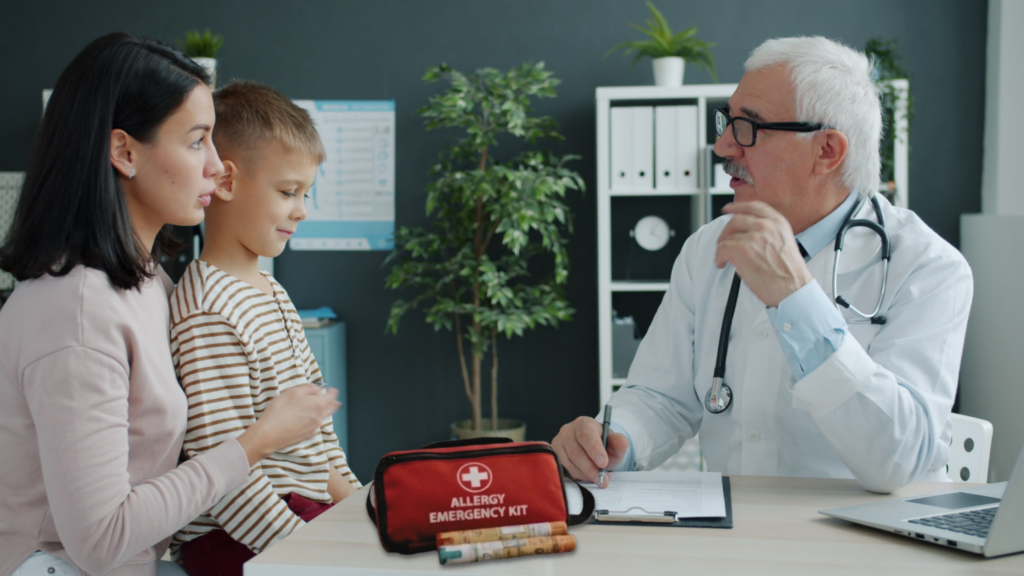
One of the most important pieces of back-to-school preparation is making sure your child’s allergy action plan is current and understood by the people who may need to act on it.
Before the school year gets fully underway, parents can work with their child’s healthcare provider and school to review the plan and confirm who is responsible for responding to an allergic emergency.
That conversation shouldn’t necessarily stop with the school nurse.
Depending on the child’s schedule, teachers, coaches, cafeteria staff, bus personnel, substitutes, field-trip chaperones, and after-school program staff could all potentially be present when a reaction occurs.
Families should also understand where prescribed emergency medication will be kept, who can access it, and what school policies apply to students carrying their own medication.
The objective is straightforward: when an emergency occurs, the plan shouldn’t have to be figured out in the moment.
Why Epinephrine Readiness Matters
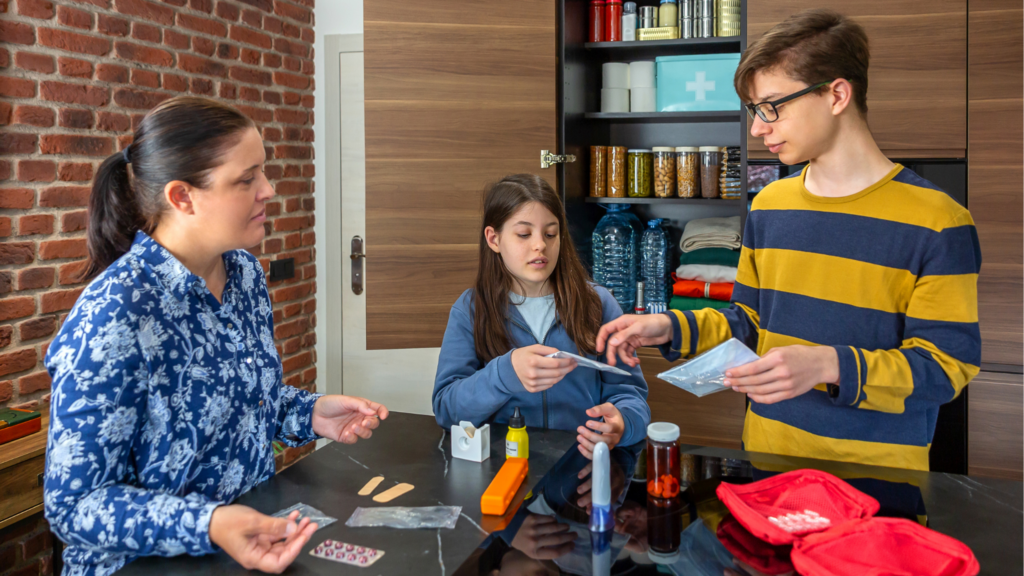
Epinephrine is the first-line treatment for anaphylaxis, which makes access to prescribed emergency epinephrine a critical part of allergy preparedness.
But simply having medication available isn’t the whole equation.
Someone has to recognize that there’s a problem, locate the medication, understand how to administer it, and act during what may be an extremely stressful situation.
That’s where usability becomes important.
For decades, injectable epinephrine has played an essential role in treating severe allergic reactions. But auto-injectors can also present practical and emotional barriers for some users.
Fear of needles or needle phobia, for example, can create anxiety around administration. Device size can affect how convenient medication is to carry. And in an emergency, parents and caregivers naturally want treatment to be as intuitive as possible for the person who may have to administer it.
These challenges have helped drive innovation in how epinephrine can be delivered.
Beyond Needle-Free: What’s Next for Emergency Epinephrine?
The arrival of nasal epinephrine represents an important evolution in needle-free emergency treatment.
But eliminating the needle may only be the beginning.
The next question is: How can nasal epinephrine itself be improved?
At Belhaven Biopharma, we believe formulation matters.
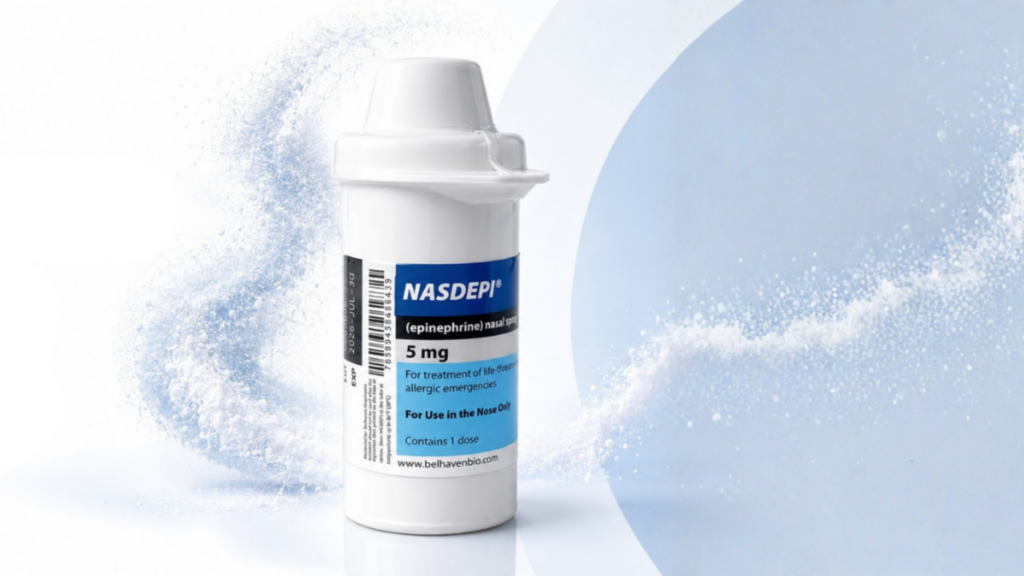
That’s why we’re developing Nasdepi®, an investigational dry-powder nasal epinephrine product. Rather than using a liquid formulation, Nasdepi® is designed to administer epinephrine as a dry powder through a compact nasal device.
That distinction could be particularly meaningful when thinking about how emergency medication fits into everyday life.
Children don’t spend their school days in controlled laboratory environments. Backpacks get left outside. Sports bags sit on hot fields. Families travel to the beach. Medication may need to accompany a student from the classroom to soccer practice, a field trip, summer camp, or vacation.
An emergency treatment needs to be ready for the realities surrounding the emergency.
How Nasdepi® Is Being Designed for Real-World Emergencies
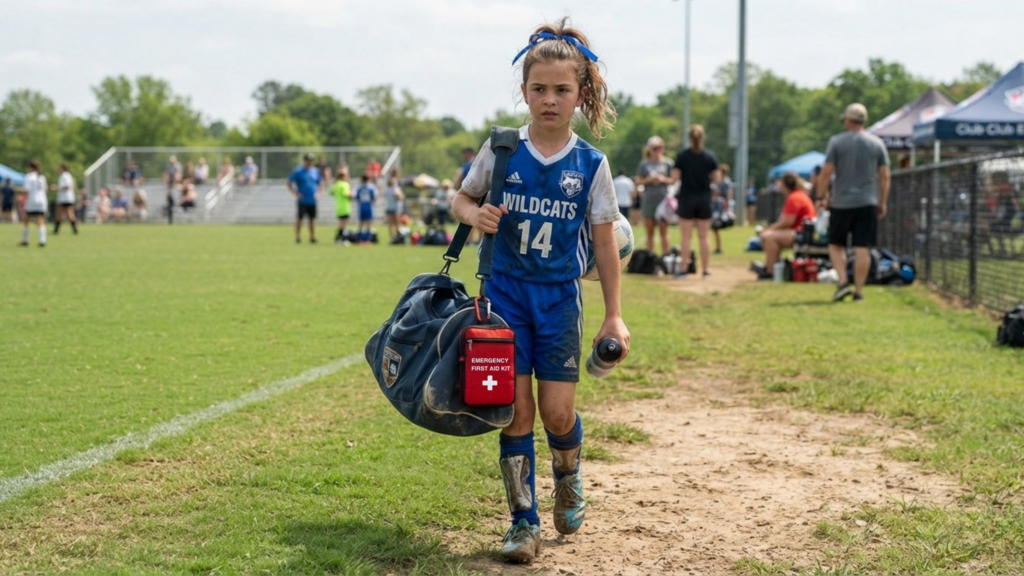
Nasdepi® is being developed around several of those real-world challenges.
Needle-Free Administration: Nasal delivery removes the injection itself, potentially addressing an important source of anxiety for people with a fear of needles.
Dry-Powder Formulation: Nasdepi® isn’t a liquid nasal spray. Its dry-powder formulation is being developed with stability and reliable epinephrine delivery in mind.
Heat Resistance: Temperature can matter when emergency medication accompanies people throughout everyday life. Nasdepi®’s dry-powder formulation is being studied for its ability to withstand high-temperature conditions—an important consideration for sports, travel, outdoor activities, and warmer climates.
Compact Design: Emergency medication is only useful when it is accessible. Nasdepi® is being designed as a portable nasal device that can fit more naturally into everyday routines.
Intuitive Use: An allergic emergency may involve a parent, teacher, coach, caregiver, or bystander. Nasdepi® is being developed with human factors and real-world usability in mind because an emergency device should be straightforward when the person using it is under pressure.
Nasdepi® remains investigational and is not currently FDA-approved or commercially available. Belhaven is continuing its clinical development as we work toward a potential new approach to emergency epinephrine delivery.
Building Confidence for the School Year Ahead

Parents can’t eliminate every potential allergen from a child’s world. But they can take meaningful steps to prepare.
As the school year begins, families managing severe allergies should review their child’s allergy action plan with their healthcare provider, communicate with school personnel, understand where prescribed epinephrine will be kept, and make sure the appropriate people know what to do during an emergency.
Preparation matters because children shouldn’t have to experience school primarily through the lens of their allergy.
At Belhaven Biopharma, we’re working toward a future in which emergency treatment for severe allergic reactions is not only effective, but also easier to carry, easier to administer, and better suited to the realities of everyday life.
Nasdepi® is our vision for that future: dry-powder, needle-free epinephrine designed for the moments when preparedness matters most.
Follow Belhaven Biopharma on LinkedIn for updates on Nasdepi® and our progress toward advancing the next generation of emergency epinephrine treatment.
